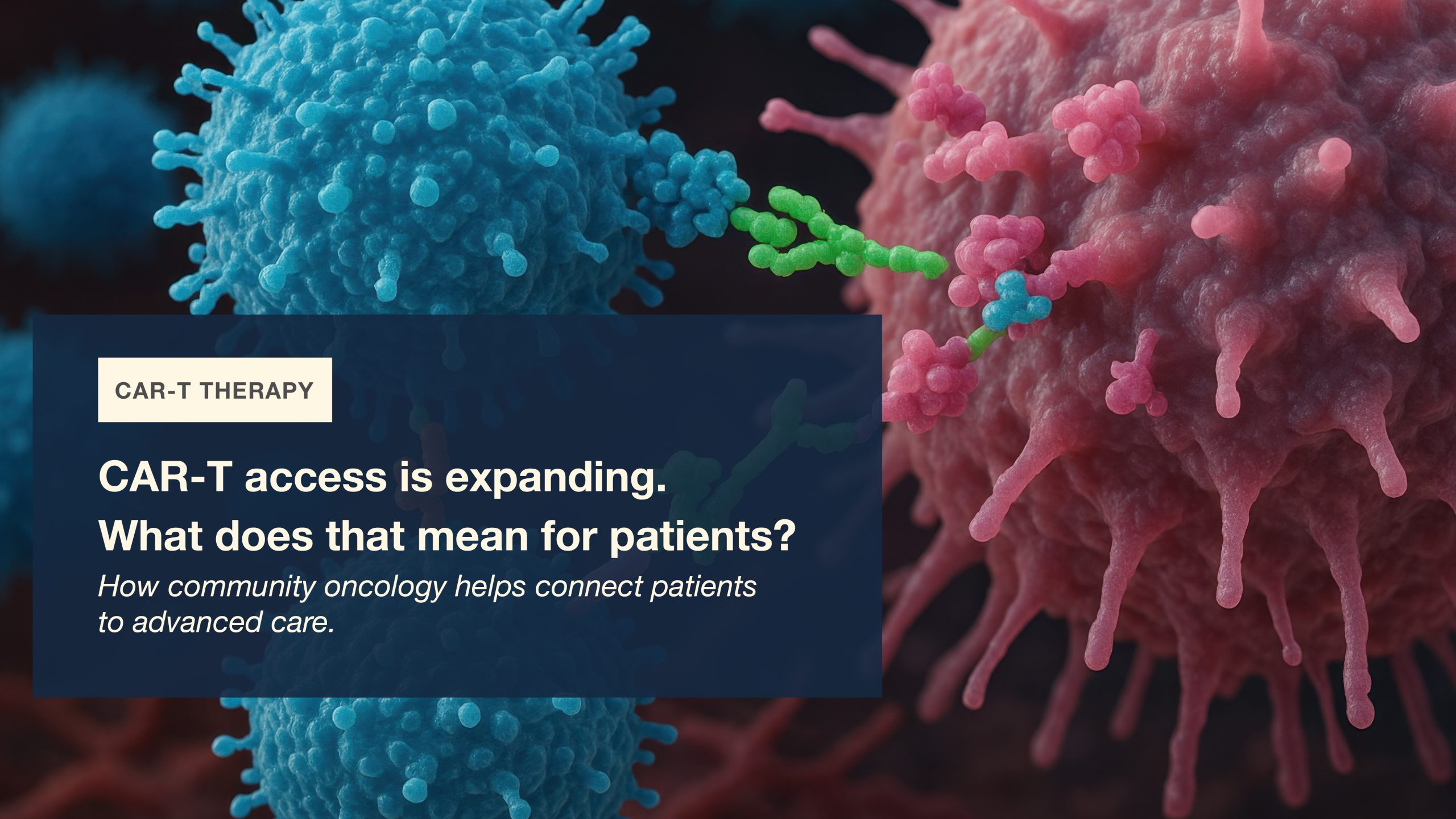
Not long ago, CAR-T cell therapy was available only at a handful of major academic medical centers. For patients who needed it, that often meant traveling far from home, staying near a treatment facility for weeks, and navigating a system that felt distant from the community-based care they were used to. For many, logistics aloneContinue reading “CAR-T Therapy and Community Oncology: What Expanded Access Means for Patients”
Category Archives: Blog
Beyond Pink: Advances That Are Changing Breast Cancer Care
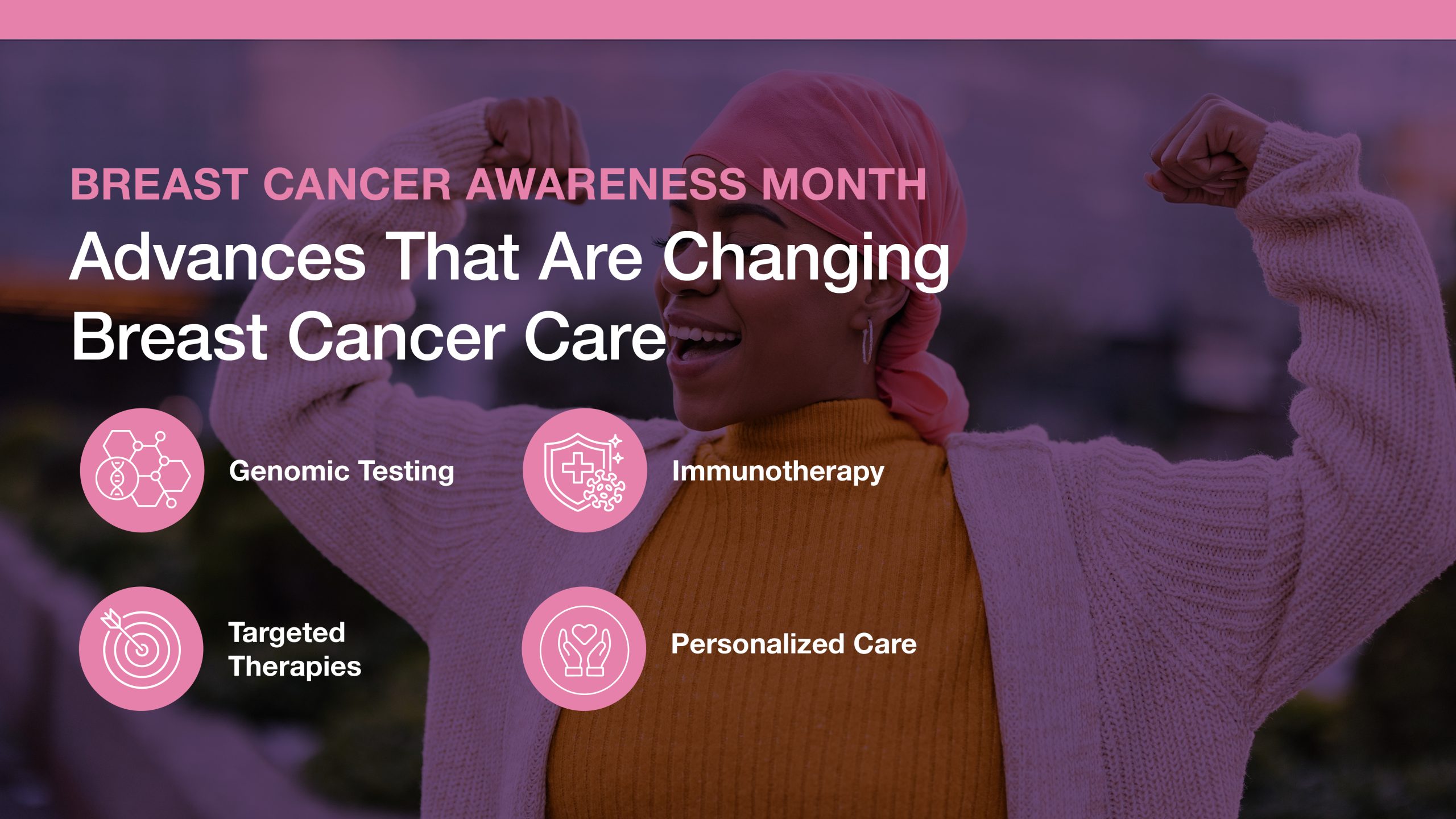
Advances in breast cancer care are making treatment increasingly personalized, giving care teams more information about individual cancers and which therapies may be most effective. Today, a breast cancer diagnosis can involve much more than identifying the location and stage of a tumor. Physicians can also evaluate the biological and molecular characteristics of the cancerContinue reading “Beyond Pink: Advances That Are Changing Breast Cancer Care”
Who Is on Your Cancer Care Team? Understanding the Experts Supporting You Beyond Your Oncologist.

Cancer care involves more than your oncologist. Learn how nurse navigators, APPs, infusion nurses, dietitians, financial counselors, and social workers support your care.
Why Keeping Up With Routine Healthcare Matters During Cancer Treatment
Cancer treatment doesn’t pause your other health needs. Learn why vaccines, dental care, and primary care still matter, and how your oncology team can help.
Back-to-School & Cancer Care: Tips for Families Returning to Routine

Managing cancer treatment during the school year? Our oncology team shares practical tips for scheduling appointments, supporting caregivers, and staying on track.
Understanding Blood Counts During Treatment
Learn what blood counts during treatment mean, including red blood cells, white blood cells, and platelets, and how they impact cancer care.
Bone & Sarcoma Month – Unexplained Bone Pain: When Should You See a Doctor?
Unexplained bone pain may be a sign of a more serious condition. Learn when to see a doctor and how symptoms may relate to bone cancer or sarcoma.
UV Safety Month: Sunscreen Myths and Facts – What Actually Protects You

Learn the truth about sunscreen myths and facts, how SPF works, and what actually protects your skin from UV damage during UV Safety Month.
Why Hydration Matters During Cancer Treatment

Hydration during cancer treatment helps support energy, kidney function, and overall health. Learn why staying hydrated matters and how patients can maintain fluid intake.
Men’s Health and Cancer: Screenings Every Man Should Know
Men’s health cancer screenings can help detect cancer early. Learn which screenings every man should know, including prostate, colorectal, and lung cancer screening.