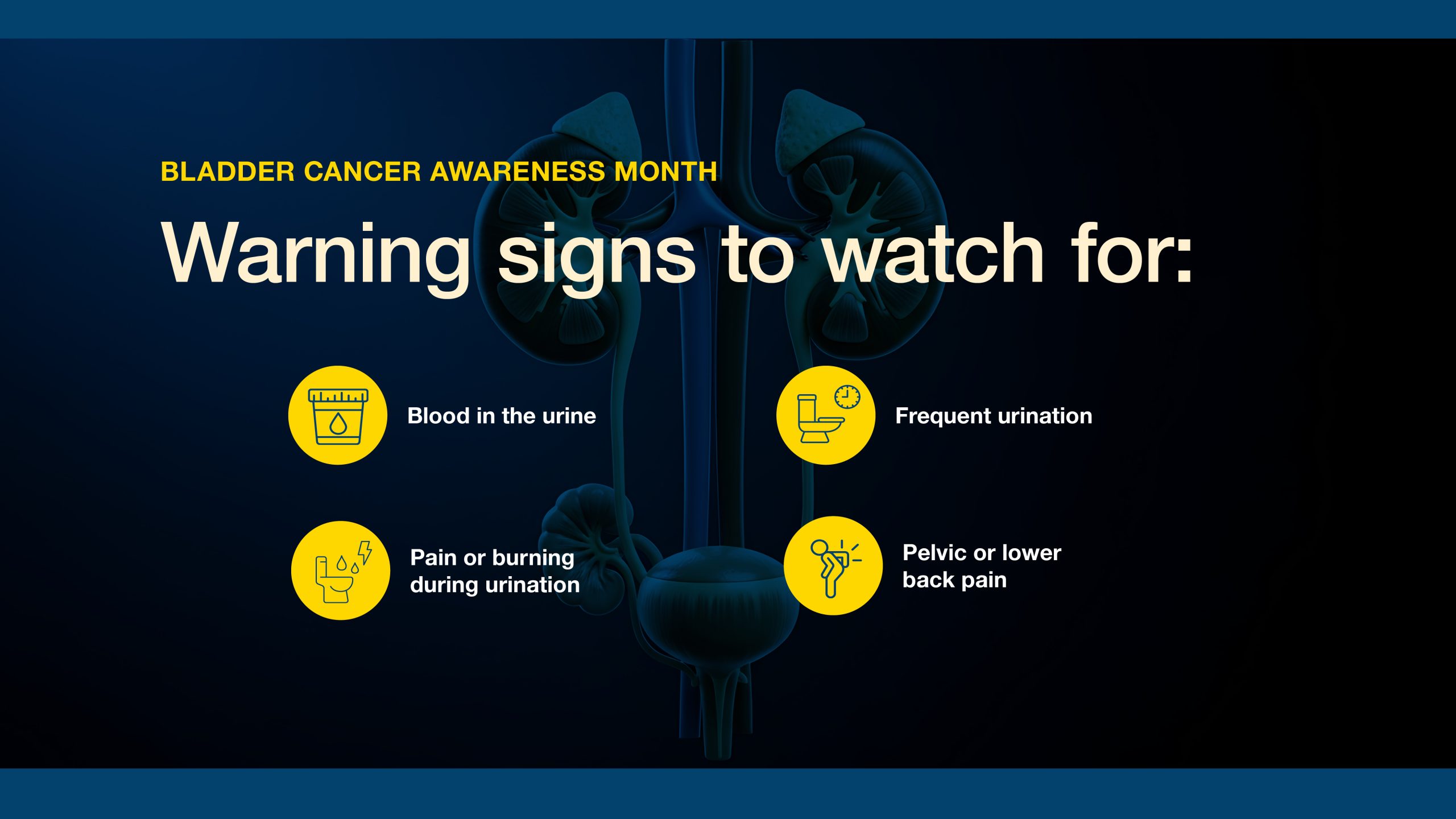
Bladder cancer awareness starts with recognizing symptoms that should never be ignored, including blood in the urine. While this symptom can be caused by several conditions, it is important to have it evaluated by a healthcare provider as soon as possible.
Bladder cancer is one of the most common cancers of the urinary system, and early detection can make a significant difference in treatment outcomes. During Bladder Cancer Awareness Month, understanding the warning signs and risk factors can help encourage earlier evaluation and diagnosis.
The Most Common Symptom of Bladder Cancer
The most common early symptom of bladder cancer is blood in the urine, also called hematuria. Blood in the urine may appear bright red, pink, or cola-colored, though sometimes it may only be detected during a laboratory test.
In many cases, hematuria occurs without pain, which can make it easy to overlook or delay evaluation. Other possible symptoms may include:
- Frequent urination
- Pain or burning during urination
- Feeling the need to urinate without passing much urine
- Lower back pain on one side
- Pelvic discomfort
These symptoms can also be caused by other conditions such as infections or kidney stones, but persistent or unexplained symptoms should be evaluated.
Why Early Evaluation Matters
Seeing blood in the urine can be alarming, but many people delay evaluation because the symptoms may come and go or happen without pain. Even if it only happens once, it should always be discussed with a healthcare provider.
Early evaluation allows providers to determine the cause and rule out serious conditions. When bladder cancer is detected in its earliest stages, treatment can often be less invasive and more effective.
According to the American Cancer Society, the five-year survival rate for bladder cancer that has not spread beyond the bladder is significantly higher than for cancers detected at later stages.
How Bladder Cancer Is Diagnosed
If a provider suspects bladder cancer, several tests may be used to determine the cause of symptoms. Diagnosis may involve:
- Urine testing, which can detect blood or abnormal cells
- Imaging studies such as CT scans or ultrasound to evaluate the urinary tract
- Cystoscopy, a procedure that allows doctors to examine the inside of the bladder using a thin camera
- Biopsy, where a small sample of tissue is removed and examined under a microscope
These tests help determine whether cancer is present and guide the next steps in care.
Treatment Options for Bladder Cancer
Treatment for bladder cancer depends on several factors, including the stage of the cancer, whether it has spread, and a patient’s overall health. Treatment options may include:
- Surgery to remove tumors or part of the bladder
- Intravesical therapy, where medication is placed directly into the bladder
- Chemotherapy
- Immunotherapy
- Radiation therapy
- Targeted therapy
In many cases, bladder cancer can be treated successfully, particularly when it is detected early. Treatment plans are personalized and may involve a multidisciplinary care team.
Being proactive about your health starts with understanding your symptoms and knowing what questions to ask during a medical visit.
Questions to Ask Your Doctor About Bladder Cancer Symptoms
If you notice blood in your urine or other urinary changes, it can be helpful to prepare questions before your appointment. Open communication with your healthcare provider can help ensure you understand the cause of your symptoms and the next steps for evaluation.
Consider asking your doctor:
- What could be causing blood in my urine?
- What tests will help determine the cause of my symptoms?
- Do I need imaging or a cystoscopy to evaluate my bladder?
- If cancer is found, what stage is it and what does that mean for treatment?
- What treatment options may be available to me?
- Should I see a specialist such as a urologist or an oncologist?
Writing down symptoms, when they started, and how often they occur can also help your provider better understand what you are experiencing.
When to Talk to Your Doctor
Any episode of blood in the urine should be evaluated by a healthcare provider, even if it occurs only once or resolves on its own. Early medical evaluation can identify the cause and ensure appropriate care. Bladder Cancer Awareness Month is an important reminder that recognizing symptoms and seeking timely evaluation can help support earlier diagnosis and better outcomes.
Latest Posts
- CAR-T Therapy and Community Oncology: What Expanded Access Means for Patients
- Beyond Pink: Advances That Are Changing Breast Cancer Care
- Who Is on Your Cancer Care Team? Understanding the Experts Supporting You Beyond Your Oncologist.
- Why Keeping Up With Routine Healthcare Matters During Cancer Treatment
- Back-to-School & Cancer Care: Tips for Families Returning to Routine