Skin cancer is the most common cancer in the United States, but many cases can be prevented through sun protection and early detection.
During Skin Cancer Awareness Month, it is important to understand the risks associated with sun exposure and the steps you can take to protect your skin in every season.
According to the Skin Cancer Foundation, more than 5 million cases of skin cancer are diagnosed in the United States each year.
Understanding Skin Cancer
Skin cancer occurs when abnormal skin cells begin to grow uncontrollably. The three most common types include:
- Basal cell carcinoma: the most common type, often appearing as a pearly or waxy bump on sun exposed areas
- Squamous cell carcinoma: often appears as a red, scaly patch or sore that may crust or bleed
- Melanoma: a less common but more aggressive form of skin cancer that can spread quickly if not detected early
While anyone can develop skin cancer, the risk increases with excessive ultraviolet (UV) exposure from the sun or tanning beds.
How to Protect Your Skin
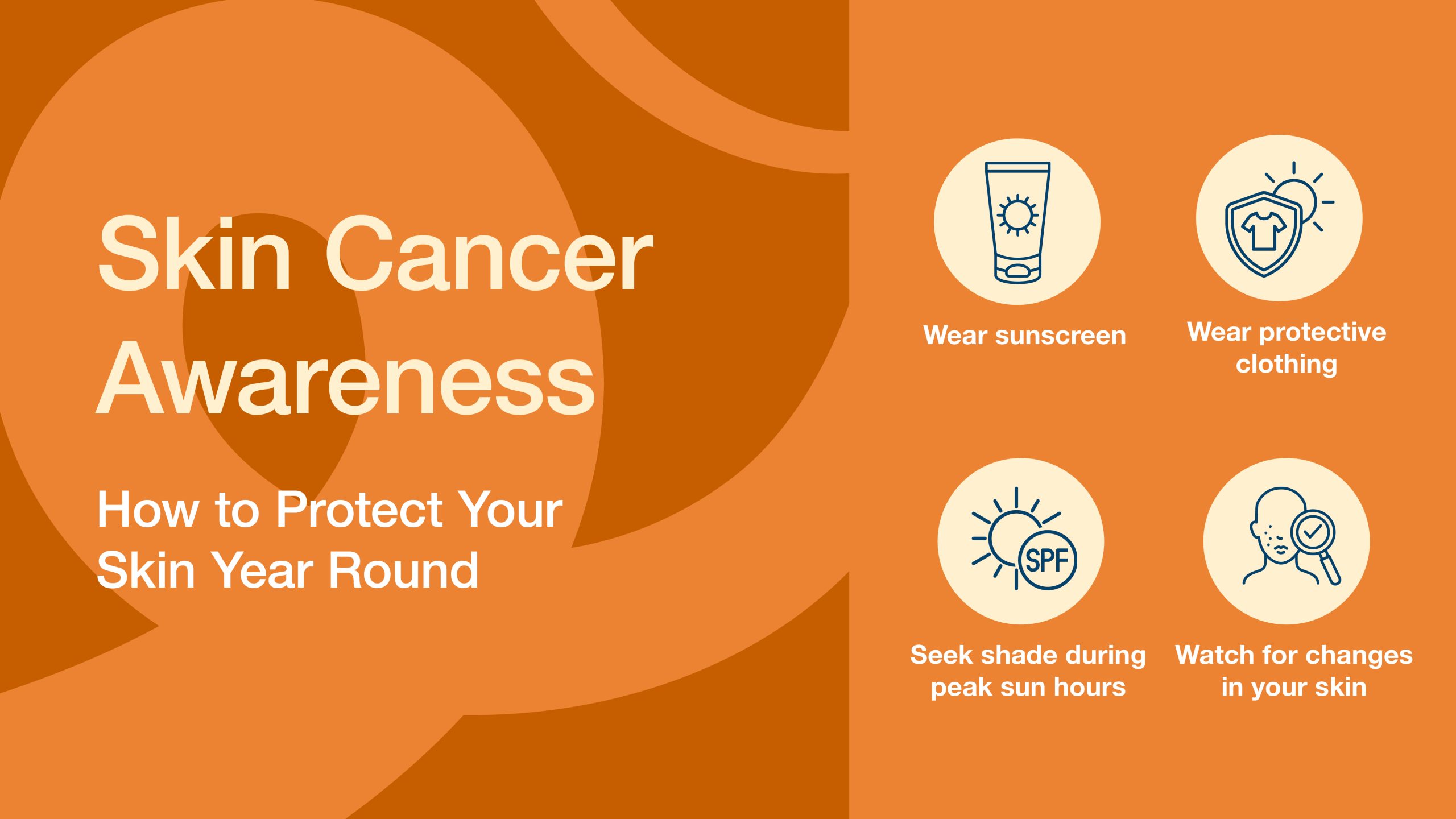
Protecting your skin from UV exposure is one of the most effective ways to reduce your risk of skin cancer. Experts recommend several simple steps that can help protect your skin year-round.
- Use Sunscreen Daily: Apply a broad-spectrum sunscreen with an SPF of at least 30 to exposed skin.
- Seek Shade: Try to limit direct sun exposure during peak hours between 10 a.m. and 4 p.m., when UV rays are strongest.
- Wear Protective Clothing: Clothing can provide an additional layer of protection. Consider wearing long sleeves, wide-brimmed hats, and sunglasses when spending time outdoors.
- Avoid Tanning Beds: Artificial UV light from tanning beds can significantly increase the risk of developing skin cancer.
Know Your Skin and Watch for Changes
Regularly, checking your skin can help identify changes early. Look for new moles or spots, or changes in existing ones.
Dermatologists often recommend remembering the ABCDE rule for melanoma:
- A – Asymmetry: one half of a mole does not match the other
- B – Border: edges are irregular or uneven
- C – Color: multiple colors or uneven shading
- D – Diameter: larger than about 6 millimeters
- E – Evolving: changes in size, shape, or color
If you notice any concerning changes in your skin, talk with your healthcare provider.
The Importance of Early Detection
When detected early, most skin cancers are highly treatable. Paying attention to changes in your skin and practicing sun protection can significantly reduce risk and support earlier diagnosis.
Skin Cancer Awareness Month is a reminder that protecting your skin is not just a seasonal habit. Sun safety and skin checks are important throughout the entire year.
Latest Posts
- CAR-T Therapy and Community Oncology: What Expanded Access Means for Patients
- Beyond Pink: Advances That Are Changing Breast Cancer Care
- Who Is on Your Cancer Care Team? Understanding the Experts Supporting You Beyond Your Oncologist.
- Why Keeping Up With Routine Healthcare Matters During Cancer Treatment
- Back-to-School & Cancer Care: Tips for Families Returning to Routine